LCO License Fees India 2026: Complete Cost Breakdown
Most operators asking about LCO license fees in India have already heard three different numbers from three different agents. One consultant quotes ₹5,000. Another quotes ₹25,000. A third throws around figures in lakhs. All of them are technically not lying — they're just mixing up the government fee with their own service charge.
Here's the actual number: the government fee for LCO registration in India is ₹5,000, paid directly through the Broadcast Seva portal. Everything above that is a professional's markup for doing the paperwork on your behalf. This guide breaks down exactly what you owe the Ministry of Information & Broadcasting (MIB), what renewal costs, and where the extra charges you've been quoted actually come from.

What Is the LCO License Fee in India?
Local Cable Operators in India don't hold a "license" in the traditional sense — they register under the Cable Television Networks (Regulation) Act, 1995, through the MIB's Broadcast Seva (BSP) portal. The government processing fee for this registration is ₹5,000, confirmed in MIB's January 2025 press release announcing the shift to a five-year validity period.
That ₹5,000 is a flat, non-negotiable government charge — it doesn't scale with the number of subscribers you serve or the towns you operate in. Don't confuse this with entry fees for other Cable TV Act categories like Multi-System Operators (MSOs) or teleport operators, which run into crores and follow a completely different registration track. If someone quotes you a fee "in lakhs" for a straightforward LCO registration, they're either quoting the wrong category or padding their invoice.
LCO License Fee Breakdown for 2026
Here's what actually shows up on an LCO's registration bill:
- Government processing fee (registration): ₹5,000 — paid to MIB via Broadcast Seva
- Government processing fee (renewal): ₹5,000 — same flat rate, no separate renewal schedule
- Validity period: 5 years nationwide, effective from January 17, 2025 (previously shorter and state-restricted)
- Digital signature certificate (DSC): ₹1,000–₹2,000 if you don't already have one — required to sign the online application
- Professional/consultant service charge: ₹15,000–₹25,000, exclusive of GST, if you hire someone to handle the filing instead of doing it yourself
That last line is where most of the confusion comes from. Firms offering "LCO registration services" bundle the ₹5,000 government fee with their own documentation, verification, and follow-up charges — one publicly listed package starts at ₹20,000 exclusive of GST for the full service. If you're comfortable filling out a government form and uploading scanned documents yourself, you can skip that markup entirely and pay only the ₹5,000 government fee.
How to Pay LCO License Fees Online via Broadcast Seva
The entire LCO registration and postal licence for cable TV process now runs online — no physical visits to MIB offices required.
- Create an account on the Broadcast Seva portal (broadcastseva.gov.in) and select the LCO registration application.
- Fill in your business details, service area, and subscriber base estimates.
- Upload required documents — identity proof, address proof, and any existing cable operation records.
- Navigate to the Fees Tab and pay the ₹5,000 registration charge online.
- Preview and submit the application for MIB review.
Processing typically takes a few weeks once documents are verified. Keep your payment receipt and application reference number — you'll need both if you have to follow up on a delayed approval.

Documents You Need Before You Pay the Fee
The ₹5,000 fee only gets processed once your application clears document verification, so gather these before you start the Broadcast Seva form:
- Identity proof of the applicant — Aadhaar, PAN, or passport
- Address proof for both the applicant and the registered business premises
- Proof of existing cable operations, if you're already running a network and formalizing registration — connection agreements, MSO feed agreements, or subscriber lists work here
- Digital Signature Certificate (DSC) to sign the application electronically
- Passport-size photograph of the applicant, scanned per the portal's size requirements
Incomplete document sets are the single biggest reason applications sit in "pending" status for weeks. Upload everything correctly the first time and you avoid a second round of the ₹5,000 fee question entirely — the charge is per application, not per resubmission, but delays compound if reviewers keep bouncing your file back.
LCO License Renewal Fees and Validity
This is the part that changed most recently, so it's worth being precise. Before January 2025, LCO registration validity and renewal cycles varied by state and were shorter. As of the MIB's January 17, 2025 notification, LCO registration is now valid for five years nationwide, and renewal carries the same ₹5,000 processing fee as fresh registration — no extra renewal-specific surcharge from the government.
Set a reminder well before your five-year window closes. A lapsed registration isn't just a compliance headache — it puts your right to operate, and your existing subscriber relationships, at risk while you scramble to re-register.
Budgeting License Fees Against Your Subscriber Revenue
A ₹5,000 government fee is small change against your monthly collections, but it's still a line item that needs tracking — especially if you're running the numbers by hand alongside subscriber bills, technician payouts, and MSO settlements. Operators managing this in spreadsheets tend to lose track of exactly when renewal is due versus when it was paid. lno360's billing module keeps recurring costs like license renewals sitting next to your subscriber collections, so nothing gets missed at the five-year mark.
LCO License Fees vs ISP License Fees: Don't Mix Them Up
If you're planning to add broadband alongside your cable TV service, know that LCO registration and an ISP license are two entirely separate approvals with entirely separate fee structures. LCO registration (₹5,000) covers cable television distribution under the MIB. An ISP license — issued by the Department of Telecommunications (DoT) — has its own category-based fee structure (Category A, B, or C) that can run significantly higher depending on your service area. For the full ISP fee breakdown, see our ISP license cost guide.
Many operators end up needing both once they pivot from pure cable TV to broadband. Budget for them separately — they don't share a fee schedule, a portal, or a renewal cycle.
Registering Is Just Step One — Growing Past It
Once your ₹5,000 registration clears, the real cost center isn't the government fee — it's how efficiently you manage the subscribers you're now legally registered to serve. Operators who register but keep running subscriber records on paper or in scattered spreadsheets tend to lose track of who's paid, who's overdue, and who's due for a service visit. lno360's subscriber management dashboard gives you one place to see your entire base against your registration — useful when you're proving compliance or applying to expand your service area.
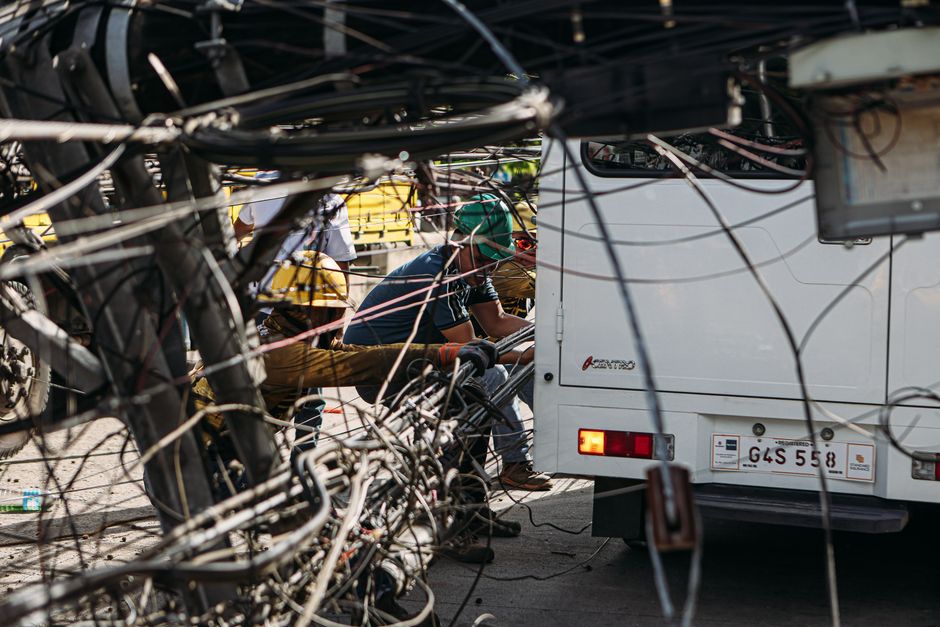
Field verification is also part of the registration and renewal process in many circles — MIB or state authorities may check that your declared service area matches your actual network footprint. Operators coordinating technician visits for line audits or new installations around a registration renewal often find it easier to track dispatch through lno360's technician dispatch feature than over phone calls and WhatsApp messages.
FAQ: LCO License Fees in India
Is the LCO license fee the same across all states in India?
Yes. The ₹5,000 government processing fee applies nationwide through the Broadcast Seva portal, and since January 2025, the five-year validity also applies uniformly across states — there's no separate state-level fee on top of it.
Why do some agencies charge ₹20,000 or more for LCO registration?
That price includes the agency's own documentation, filing, and follow-up service — not an additional government charge. The MIB fee itself stays at ₹5,000 regardless of who submits the application.
Do I need to pay the LCO license fee again every year?
No. Since the January 2025 update, registration is valid for five years. You pay the ₹5,000 fee at registration and again only at renewal, five years later.
Is the LCO registration fee different from the postal licence for cable TV?
"Postal licence" is an older, informal term some operators still use for the same MIB registration process, now fully digitized through Broadcast Seva. There isn't a separate physical postal licence fee anymore — it's the same ₹5,000 online registration.
What happens if I operate without paying the LCO license fee?
Operating without valid MIB registration exposes you to penalties under the Cable Television Networks (Regulation) Act and puts your ability to legally distribute cable services at risk. It's a one-time-per-five-years cost that's cheap insurance against that exposure.
Can I pay the LCO license fee without hiring a consultant?
Yes. The Broadcast Seva portal is designed for self-filing. If you're comfortable with basic document uploads and online forms, you can complete the entire process — and pay only the ₹5,000 government fee — without a professional service in between.
Key Takeaways
The government-mandated LCO license fee in India is ₹5,000 for both registration and renewal, valid for five years nationwide since the MIB's January 2025 update. Anything you're quoted above that is a service charge, not a statutory fee — know the difference before you sign with an agency. Once you're registered, the bigger cost driver isn't the fee itself but how well you manage the subscriber base your registration entitles you to serve. If you're an LCO looking to run billing, subscriber records, and field operations from one place instead of juggling spreadsheets and paper registers, lno360.com is built specifically for operators in your position.