In 1996–97, a group of cable operators in Kerala did something unusual: instead of competing against each other while corporate MSOs picked them off one by one, they formed a collective. That collective — the Cable TV Operators Association — eventually became Kerala Vision Broadband Limited (KVBL). By FY 2024–25, KVBL crossed ₹1,000 crore in consolidated annual revenue, grew broadband connections from 10.1 lakh to 13 lakh in a single year, and became the 6th largest ISP in India by subscriber count. The company did all of this without abandoning the operator-first philosophy that started it. For any LCO running a local broadband network today, the KVBL story is worth studying closely.
The Architecture That Makes It Work: 5,000 LCOs as the Last Mile
Most ISPs structure their business around a central NOC, a billing team, and a fleet of employed field technicians. KVBL does something fundamentally different. Its operational model runs through four layers: the ISP/MSO at the top, 30 distributor companies handling regional logistics, 168 sub-distributors managing local coordination, and over 5,000 LCOs doing the actual last-mile work — physical installation, community relationships, and immediate customer response.
Each layer earns a share of revenue. The LCO isn't a subcontractor paid a flat rate per connection — they have skin in the game for every subscriber they retain. This changes behaviour dramatically. An employed technician who fixes a fault gets paid the same whether the customer stays or leaves. An LCO who owns the last-mile relationship loses money when that customer churns. The incentive structure aligns with retention, not just installation.
The result is a Mean Time To Repair (MTTR) that centralised ISPs struggle to match. When a subscriber's connection drops at 9 PM, the local operator — often someone from the same neighbourhood — has a direct financial reason to resolve it quickly. Jio or Airtel dispatching a technician from a centralised pool the next morning simply cannot compete with that response speed at scale.
Rural First: Why 70% Penetration in Underserved Markets Beats Urban Competition
Corporate ISPs chase density. More subscribers per square kilometre means lower cost-per-connection and faster ARPU recovery on infrastructure spend. This logic concentrates investment in cities and large towns, leaving rural markets underserved. KVBL took the opposite approach.
Today, KVBL holds approximately 70% rural broadband penetration across its Kerala network — making it the second largest rural broadband provider in India after BSNL, according to the Department of Telecommunications. That rural dominance wasn't charity. Rural communities, once connected, have strong retention behaviour. Switching costs are high when your ISP is the local operator you've known for years. Churn in rural segments is structurally lower than in urban markets where three or four competitors are fighting over the same apartment block.
KVBL leveraged this rural base through the Kerala Fiber Optic Network (KFON) and dedicated tribal internet projects. When Phase 1 of the national expansion targets Karnataka and West Bengal, it's the rural playbook — not urban competition — that drives the market entry strategy. The argument is straightforward: KVBL already knows how to serve markets corporate ISPs find structurally unattractive. Those markets still have millions of unconnected or underserved households.
The Financial Proof: What the Numbers Say About the Model
Operator-led models are sometimes dismissed as low-margin, fragmented, and hard to scale. KVBL's standalone financials directly challenge that assumption. On a standalone ISP basis, total income grew from ₹449.71 crore in FY 2023–24 to ₹558.47 crore in FY 2024–25 — a 24% year-on-year increase. More significant: Profit After Tax jumped from ₹2.19 crore to ₹16.74 crore, a 7x increase in net profit in a single year.
Subscriber additions tracked the financial growth: 10.1 lakh connections in FY24 to 13.05 lakh in FY25. That's 2.9 lakh net new connections added in twelve months — roughly 24,000 new subscribers per month — without the aggressive below-cost pricing that Jio Fiber used to acquire urban market share.
The consolidated ₹1,000 crore figure includes the full operator network, subsidiary entities (KCCL, KV-TEL), and the integrated ecosystem. KVBL currently holds only 0.10% of the national broadband market. That small share, combined with a proven model and established operator network, defines the expansion opportunity: if the Kerala blueprint can be replicated in states with similar LCO density, the national ceiling is many times the current scale.
Technical Infrastructure: What a Scalable LCO Network Actually Needs
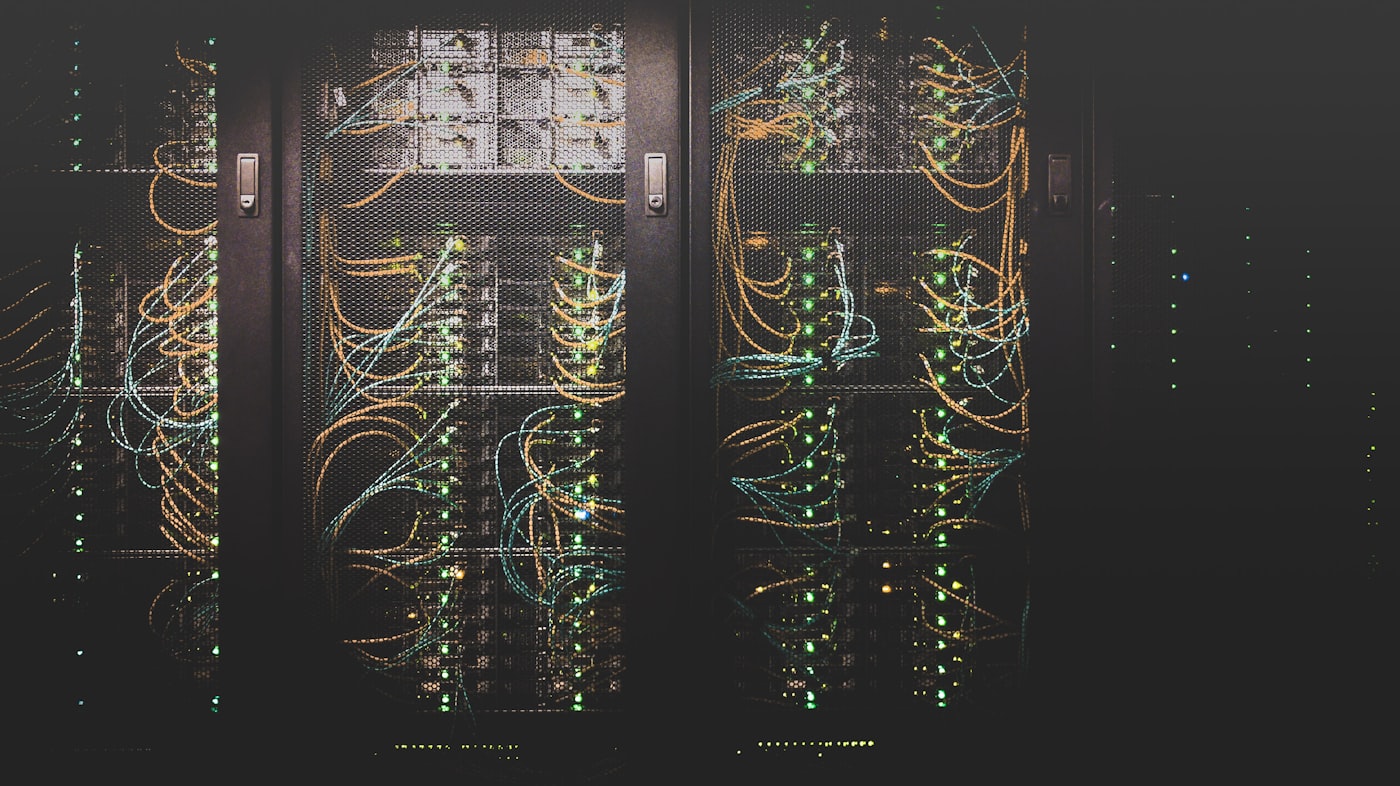
Running 13 lakh broadband connections generates close to 2 Tbps of traffic. KVBL is responding by upgrading its MPLS core aggregation transport network from 400Gbps to 800Gbps — a necessary step before entering new states. On the edge, Juniper hardware handles distributed BNGs for low-latency subscriber connectivity, while Arista devices manage peering at POPs in Chennai and Mumbai.
CDN capacity — Google, Facebook, Akamai, and Cloudflare caching — has been upgraded to over 1Tb. IPv6 deployment for capable subscribers and NAT bypass for high-traffic services like Netflix and Google has improved performance by 70% while conserving public IPv4 addresses. The roadmap includes Software Defined Networking (SDN) and Hyper-Converged Infrastructure (HCI) across data centres in Thrissur and Cochin.
This level of infrastructure investment isn't accessible to a single 500-subscriber LCO — but the principle applies at every scale. LCOs who want to survive consolidation need to understand their technical stack well enough to make the case for infrastructure upgrades to their distributor or MSO. Operators who can demonstrate low MTTR, stable uptime, and consistent throughput to their network partners have leverage. Those who can't get replaced.
Three Lessons for Every LCO Watching the Market Consolidate
KVBL's story isn't just about one company. It's a demonstration of what organised, technology-enabled, operator-led networks can achieve. Three things stand out as directly applicable to any LCO operating today.
1. Collective strength beats individual negotiation
KVBL's founding story — 5,000 operators unified under one umbrella to resist exploitation by corporate MSOs and state departments — is directly relevant to LCOs today facing Jio Fiber's pricing or BSNL's subsidised plans. Individual LCOs trying to compete alone on price will lose. Operators who build shared infrastructure, joint purchasing power, and coordinated service standards have a structural defence.
2. Retention is built on local accountability, not SLA documents
KVBL's low churn and high rural penetration trace back to operators who live in the communities they serve. A corporate ISP can write a 4-hour SLA into a contract. The LCO who fixes the issue before dinner because he runs into the subscriber at the local market is offering something fundamentally different. That relationship is the product. Managing it well — tracking complaints, closing tickets fast, proactively communicating outages — is what converts community trust into long-term revenue.
3. ARPU growth requires enterprise and institutional verticals, not just residential plans
KVBL's enterprise vertical — serving clients like Kerala Bank, TATA, Muthoot, and SP Fort Hospital with ILL, managed Wi-Fi, and secured WAN — is a direct response to ARPU pressure in residential broadband. LCOs at a smaller scale have the same opportunity: local schools, clinics, retail outlets, and small manufacturers need reliable connectivity and are willing to pay significantly more than residential rates for it. One 50 Mbps leased-line connection to a local hospital may generate more monthly revenue than 30 residential subscribers.
The Bigger Picture: What Expansion to Karnataka and West Bengal Tells Us
KVBL's Phase 1 national expansion — targeting Karnataka and West Bengal with the Kerala Blueprint — is a signal about the direction of Indian broadband. The Indian fiber market is projected to reach 80 million connections by 2030, roughly triple the current base. The majority of that growth will come from Tier 2, Tier 3, and rural markets where LCOs are the primary distribution mechanism.
Organised, technology-enabled LCO networks — where billing is automated, complaints are tracked, field teams are dispatched efficiently, and data is visible — will absorb that growth. Fragmented operators running on WhatsApp groups and manual ledgers will be absorbed by the networks that aren't.
KVBL built a ₹1,000 crore business by trusting that the LCO — not the corporate NOC — is the most important node in the network. The operators who recognise that about their own businesses, and invest accordingly in the systems that make local service scalable, are the ones who will still be growing in 2030.