In 2018, India had 151 million pay TV subscribers. By 2024, that number had crashed to 111 million — and projections from EY and the All India Digital Cable Federation (AIDCF) suggest it could fall to between 71 and 81 million in the coming years. For India's 81,000+ Local Cable Operators (LCOs), this isn't a distant warning. It's playing out right now in your subscriber list.
93% of LCOs surveyed by EY and AIDCF reported a drop in monthly take-home income since 2018. Nearly 577,000 jobs have been lost in the cable TV industry between 2018 and 2025. DTH players lost 6 million active subscribers in just 12 months between June 2024 and June 2025.
Cable TV is dying in India. The question is what you do next. This guide is for LCO owners who want honest answers — not false reassurance. We'll break down exactly why cable TV is declining, what options you have, and the concrete moves you should make in 2026 to protect your business and grow.
What This Guide Covers
- The real numbers behind cable TV decline in India
- Why it's happening — OTT, DD Free Dish, and pricing confusion
- What happens to LCOs who don't adapt
- Pivot Option 1: Launch broadband services
- Pivot Option 2: Become an OTT aggregator and content gateway
- Pivot Option 3: Partner with big telcos (Jio/Airtel) — the trade-offs
- What South Indian LCOs are doing right
- Tools and systems you need to make the transition
- Frequently asked questions
The Numbers Don't Lie: Cable TV Decline in India
The cable TV subscriber decline in India is not a blip. It is structural.
- Pay TV subscribers: 151 million (2018) → 111 million (2024) → projected 71-81 million by 2028 (EY/AIDCF)
- Active DTH subscribers fell from 62.17 million (June 2024) to 56.07 million (June 2025) — 6 million lost in 12 months
- Pay DTH dropped from 56.92 million (March 2025) to 49.05 million (March 2026) — a 13.8% decline in one year
- 93% of LCOs surveyed report lower monthly income compared to 2018
- Almost half of LCOs reported a shrinking subscriber base; nearly 10,000 reported income losses exceeding 40%
Meanwhile, broadband connections in India surged from 6.1 crore in March 2014 to 99.56 crore (995.6 million) in September 2025 — a 1,500% increase in just over a decade. The direction of travel is unmistakable.
'The cable TV subscriber decline in India is not a blip. It is structural.' — The data is clear: people are cutting the cord.
Why Cable TV Is Losing Ground in India
Understanding the causes matters because different causes require different responses.
1. OTT Platforms Have Won the Prime Time Battle
JioHotstar, Netflix, Amazon Prime Video, Sony LIV, Zee5 — Indian consumers now have access to high-quality content on their phones and smart TVs, often bundled into their mobile or broadband plans. A ₹149 JioHotstar mobile plan gives access to IPL, web series, movies, and news. For a household already paying for mobile internet, why pay separately for cable TV?
2. DD Free Dish Eats the Budget Subscriber Base
DD Free Dish now offers 700+ channels for free via DTH. This has effectively wiped out the lower end of the cable subscriber market. Viewers who watched 20-30 standard definition channels can now get more for nothing. LCOs who built their base on budget subscribers have been hit hardest.
3. TRAI's 2019 Tariff Order Created Pricing Confusion
TRAI's New Tariff Order (NTO) mandated that subscribers select individual channels and pay accordingly, rather than pre-packaged bundles. The result: billing complexity skyrocketed, subscriber confusion increased, and many households simply switched to OTT instead of navigating complicated channel packages. LCOs caught in the middle took the revenue hit without causing the problem.
4. Smart TVs and Streaming Devices Are Everywhere
A Fire TV Stick costs ₹2,499. A ₹10,000 Android TV is now entry-level. Once a household has a smart TV, the pull of cable weakens. The set-top box becomes redundant. This hardware shift is permanent.
What Happens to LCOs Who Don't Adapt
Staying still is not a neutral choice — it is a choice to decline. Based on current trends:
- Cable TV subscriber bases will continue shrinking at 5-10% per year
- MSOs (Multi System Operators) will squeeze LCO margins as they try to protect their own revenues
- Infrastructure becomes a liability, not an asset, if it only carries cable signals
- Younger demographics are essentially unreachable via cable TV — they've never subscribed
The EY/AIDCF survey found that nearly 10,000 LCOs are already reporting income losses of more than 40%. For these operators, the window to act is narrowing rapidly.
Option 1: Pivot to Broadband — The Right Way
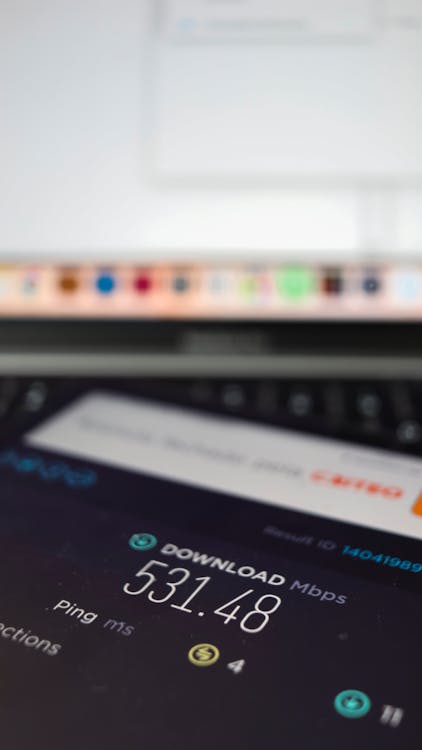
The most direct path forward for most LCOs is to launch broadband services using the same infrastructure footprint they already have. 43% of LCOs surveyed by EY/AIDCF have already done this. But success is not guaranteed.
What Works
- Use existing coaxial or aerial cable routes to deploy fiber-to-the-home (FTTH) using GPON
- Target existing cable subscribers first — they already know you and trust your technicians
- Offer bundled plans: cable TV + broadband at a slight discount to retain fence-sitters
- Focus on speeds above 50 Mbps — this is where Jio and Airtel are less competitive at the hyperlocal level
- Serve apartments and housing societies where big telcos haven't reached yet
What Doesn't Work
- Launching broadband without getting a proper ISP license from DoT — this is not optional
- Underpricing just to compete with Jio — race to the bottom destroys margins
- Running broadband operations on pen-and-paper billing — you'll lose track of payments and renewals fast
Managing broadband subscribers at scale requires proper billing software. LNO360's billing and subscriber management dashboard is built specifically for LCOs making this transition — automated invoicing, GST compliance, renewal alerts, and a live subscriber view across your entire network. If you're managing 200+ broadband customers, this is non-negotiable.
For a step-by-step guide on the licensing and infrastructure requirements, read our complete guide: /blog/cable-operator-to-isp-transition-guide-2026/.
Option 2: Become an OTT Aggregator and Content Gateway
Rather than fighting OTT, smart LCOs are becoming the distribution layer for OTT content. This works particularly well in Tier 2-3 towns and rural areas where individual OTT subscriptions are not the default behavior.
- Bundle Netflix, JioHotstar, or Sony LIV into your broadband plans for a modest markup
- Offer a 'managed streaming' plan — you handle the subscriptions, they get seamless access
- Set up community Wi-Fi in dense housing colonies with an OTT bundle baked in
- Position yourself as the local tech helpdesk for smart TV and streaming setup
This model is already working in Kerala. Kerala Vision, which built a 1 million+ subscriber base across the state, has consistently bundled content with connectivity. Their model shows that LCOs who become the local single point of contact for all home entertainment — cable, broadband, and OTT — retain far higher loyalty than those offering only one service.
Read the full breakdown: /blog/kerala-vision-lco-model-lessons-india/.
Option 3: Partner with Big Telcos — The Trade-Offs
Jio and Airtel are actively approaching LCOs to install and maintain local fiber networks on their behalf. This gives LCOs a stable revenue stream without the full complexity of running an ISP. But there are real trade-offs to understand.
Advantages
- Guaranteed per-connection revenue — no subscriber acquisition risk
- Infrastructure investment (fiber, ONTs) often funded by the telco
- You use existing local knowledge and relationships
- No need for a separate ISP license in certain partnership models
Risks
- You become a subcontractor, not a business owner — margins are fixed and low
- The telco can terminate or renegotiate the agreement
- You build connectivity for Jio, not for yourself — your subscribers become Jio's subscribers
- No differentiation possible — you're delivering someone else's product
The partnership model can be a smart bridge for LCOs who aren't ready to become full ISPs, but it should not be a long-term strategy. The LCOs building durable businesses are the ones who control their own subscriber relationships.
If you do take on telco partnership work and manage technician deployments, lno360's technician dispatch and field ops module helps you track installations, schedule maintenance, and log completion — keeping your service quality measurable and your billing accurate.

What South Indian LCOs Are Doing Right
The LCOs navigating the cable TV decline most effectively are disproportionately in South India — and there are structural reasons for this.
- Higher fiber penetration: Kerala and Tamil Nadu have significantly higher FTTH adoption rates than the national average, giving LCOs there a head start on infrastructure
- Stronger LCO associations: Operators in these states have banded together to negotiate better MSO terms and share infrastructure costs
- Content-savvy subscribers: Malayalam and Tamil content drives strong regional OTT demand, which LCOs can bundle into broadband plans
- BharatNet overlap: Kerala's KFON project and BharatNet Phase 3 expansion in Tamil Nadu give smaller LCOs access to middle-mile connectivity they couldn't afford independently
Kerala Vision's trajectory — from a regional cable operator to a 1 million+ subscriber broadband network — is the clearest proof point that LCOs can make this transition at scale. Their key moves: early fiber investment, subscriber trust built over decades, and a willingness to cannibalize their own cable revenue before a competitor did it for them.
Read more: /blog/how-to-grow-cable-operator-business-india/.
Tools and Systems You Need to Make the Transition
The operational difference between an LCO that succeeds in broadband and one that fails is often not infrastructure — it's management. Here's what you need:
- ISP license (DoT Category C) — non-negotiable. Get this before launching services.
- GPON/FTTH equipment — ONUs, OLTs, fiber splitters. Start with a small grid and expand.
- Billing software with GST compliance — manual billing breaks at 100+ subscribers.
- Complaint ticketing system — TRAI mandates complaint resolution timelines. You need a log.
- Network monitoring — know which OLT port is down before your subscriber calls you.
LNO360 covers all of this in a single platform built for Indian LCOs — billing automation, subscriber management, complaint ticketing, and OLT/network monitoring. If you're scaling from cable to broadband, check out lno360.com to see how operators like you are managing the transition.
The operators who try to manage broadband at scale using WhatsApp messages and Excel sheets hit a wall around 200-300 subscribers. Those who invest in proper systems early grow past 1,000 with the same team.
Frequently Asked Questions
Is cable TV completely dying in India, or is it just slowing down?
Cable TV is in structural decline — not a temporary dip. Pay TV subscribers have fallen by 40 million since 2018 and projections show another 30-40 million subscriber loss by 2028. The causes (OTT, smart TVs, DD Free Dish, pricing confusion from NTO) are not going away. Some LCOs will maintain a residual cable subscriber base among older demographics for years, but it's not a growth business.
Can LCOs really compete with Jio and Airtel in broadband?
Yes — but not by going head-to-head on price. LCOs win on hyperlocal reach, faster installation, personal service, and access to areas that Jio and Airtel have not yet densely penetrated. The EY/AIDCF survey found that less than 10% of LCOs succeed in broadband broadly — but the ones who do succeed focus on specific localities, bundle services smartly, and use proper billing and support systems to retain subscribers.
What is the minimum investment to start broadband as an LCO?
A typical small-scale FTTH deployment for 100-200 subscribers requires an investment of ₹8-15 lakh for equipment (OLT, ONUs, fiber, splitters) plus around ₹1-2 lakh for DoT Category C ISP licensing fees. Costs vary significantly by geography. The DoT reduced entry-level ISP license fees for Category C to ₹10,000, making the regulatory hurdle lower than before.
What is the TRAI NTO and how did it hurt LCOs?
TRAI's New Tariff Order (2019) required cable TV subscribers to choose and pay for individual channels rather than pre-bundled packages. This increased billing complexity for LCOs and confused many subscribers. The result was subscriber churn to OTT platforms and DTH providers who offered simpler packages. TRAI has since made adjustments to the NTO, but the structural shift it triggered — subscribers reconsidering cable TV value — has not reversed.
Should I shut down my cable TV operations and focus only on broadband?
Not necessarily — at least not immediately. A bundled cable + broadband offering can retain subscribers who still want both. But the investment in new cable TV infrastructure should stop. Use cash flow from cable to fund broadband expansion, and plan for cable TV to be a declining portion of revenue over the next 3-5 years. The transition is a multi-year process, not a single switch.
How is cable TV decline in India different from what happened in the US?
India's cable TV decline is faster and more concentrated than the US cord-cutting trend because: (a) OTT came to India at the same time as affordable smartphones, compressing the timeline; (b) DD Free Dish provides a free alternative; (c) ARPU for cable TV in India was already low, giving subscribers less friction to switch; and (d) Jio's entry in 2016 fundamentally disrupted data pricing, making mobile streaming affordable for hundreds of millions of users simultaneously.
Conclusion: Cable TV Is a Business in Decline — Here's Your 2026 Playbook
The data is clear: cable TV is dying in India, and the decline is accelerating. For LCOs, this is not the time for denial or delay. The operators who will thrive in 2026 and beyond are those who use their existing strengths — local presence, last-mile infrastructure, subscriber trust — to pivot toward broadband and become full-service home connectivity providers.
Your 2026 action list:
- Audit your current subscriber base — how many are cable-only? That number defines your urgency.
- Get your DoT Category C ISP license if you haven't already.
- Start a small FTTH pilot in your densest area. Prove it works before scaling.
- Move billing and subscriber management to a proper platform. Excel won't scale.
- Explore OTT bundling to increase per-subscriber revenue without proportional cost increases.
- Stop investing in cable TV infrastructure. Redirect that capex to fiber.
If you're ready to build the operational backbone for this transition, lno360.com is built for exactly this. LCOs across India are using it to manage their broadband subscribers, automate billing, handle complaints, and monitor their fiber networks — all in one place.